Sir Colin Mackay 1943-2026: Memorial in Middle Temple Hall
30th March 2026
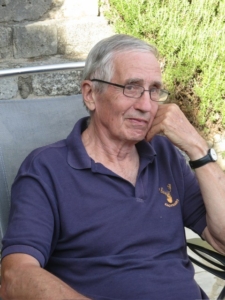
The family has asked us to pass on to all who knew Colin that there is to be a Memorial event in Middle Temple Hall. It is presently provisionally booked for 5.30pm on Monday 13th July 2026. Anyone who knew Colin is welcome to attend and should indicate their intention here
Memorial by Charlie Cory-Wright KC, Joint Head of Chambers
Colin died last Thursday, 26th March. Very shortly after his death was announced, a close friend – a senior personal injury silk who knew Colin well – sent me this message.
Colin – Just seen the news. He was so very special. I remember thinking once when in his presence that he was what I wanted to aspire to be like, both as a lawyer and a man. I had so much love and respect for him
Paul nailed it in three sentences. Colin was all you would ever want in a barrister and in a judge. He had an absolutely first rate legal mind. He was wise and kind. He was intelligent, calm, and modest. He listened. He was serious when he needed to be, but always had a twinkle in his eye. He was readily approachable, very patient, and generous of spirit. And most of all he really cared.
But there was so much more to Colin than being a great barrister or a great judge. He never saw himself, or wanted others to see him, as a lawyer first and foremost. To use the modern parlance, that was not his identity. And indeed he did not really respect those who saw themselves that way. His world was rather expressed for, and by, him through his relationships; primarily with Rosie, and with their children, Polly, Alex, and Archie, and their families. But also, and nearly as importantly, with his friends, in Chambers and outside, and with his country of origin. He was (mostly) quietly proud of being Scots.
He was, and remains, one of the most loved people I have ever known. The reasons that people loved him were those same qualities that made him a great lawyer: wisdom, kindness, modesty; but also his warmth, his humour – he had a devastating wit – and his enormous and eclectic range of knowledge, motivated by a fascination with the world and with its culture.
Edwin Glasgow, who had probably known him for longest amongst any of us in Chambers, describes him as “one of the most outstandingly brilliant, decent and modest members and heads of our chambers we ever had, and a very precious and special friend to so many of us.”
Lord Dyson, who had been Head of Chambers immediately before Colin, describes how when he joined Chambers as Head in 1986 (at which time there were 17 members) ”there was no Chambers committee. Colin was my right-hand man. I turned to him for advice on any difficult issue. He was unfailingly wise and sensible and generous with his time and personally very kind to me. He also had great judgment. He was great company, amusing and occasionally wickedly witty. In short, a wonderful human being.”
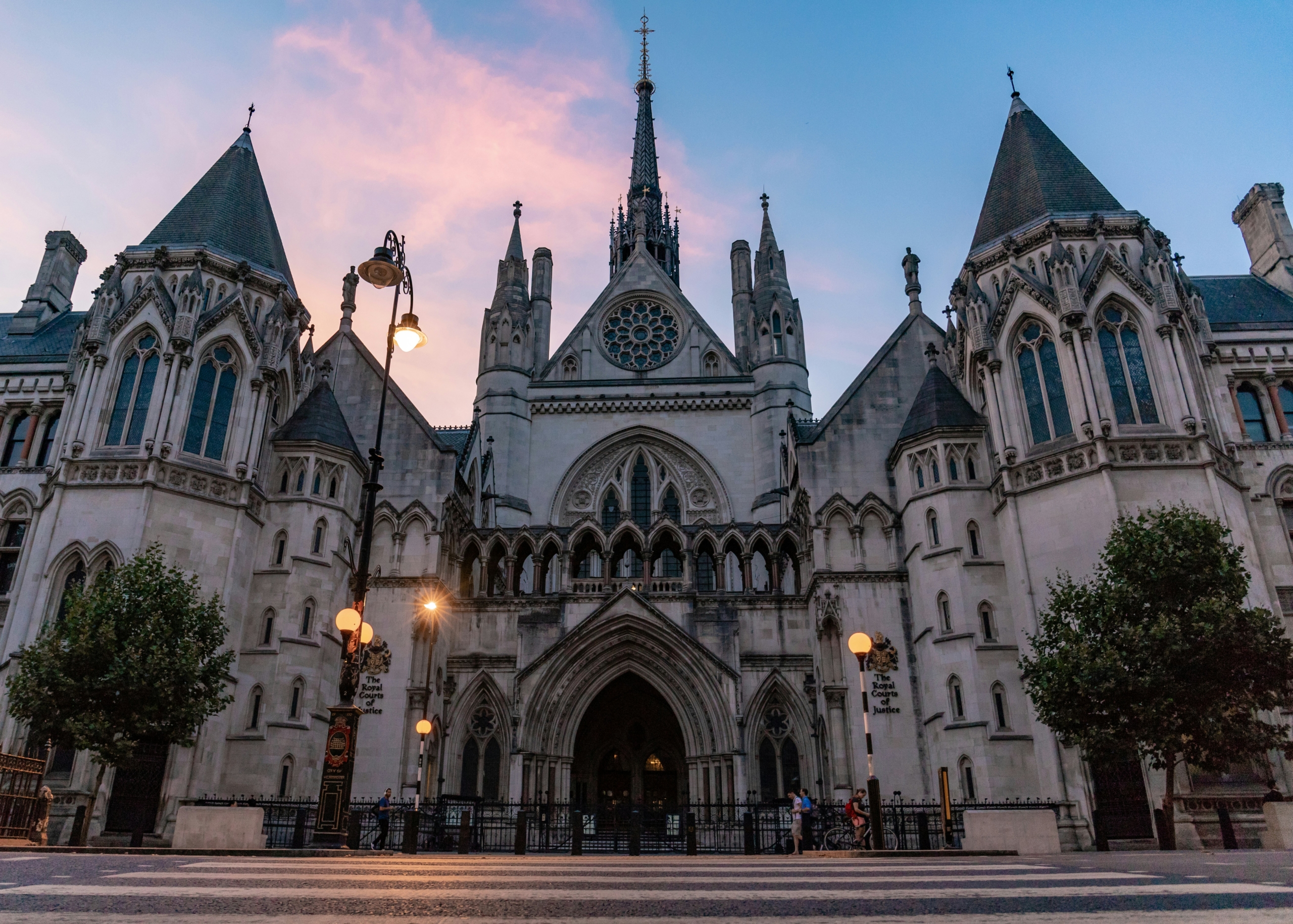
John has also, very kindly, provided a copy of his eulogy in the RCJ upon Colin’s retirement, in which he described Colin’s qualities as a judge more acutely and eloquently than any of the rest of us could do.
Colin Mackay became a judge by the most traditional and for many years most conventional route possible. Radley College; Corpus Christi College, Oxford on an Open Classics Scholarship; a degree in Classical Mods and Greats; called to the Bar in 1967; QC in 1989; Bencher of Middle Temple in 1995; and High Court Judge in 2001. Our Victorian ancestors would have approved. This looks like the career path of an ambitious and conservative man always destined for a life in the establishment. And in some respects, that is indeed the man.
But things are a little more complicated than that. Those who know Colin well are aware that there is a certain irreverence about him and a certain mischievous aspect to his character. He hates cant. He loves pricking balloons of pomposity. He enjoys exposing the self-important for what they are. So he has always been a little schizophrenic about the idea of spending the whole of his life in what is perceived as the Establishment.
When asked whether he would like to be a High Court Judge. “Me, a high court judge”? That was a very doubtful proposition. After all, he had spent his whole professional life appearing in front of high court judges, and they were, to say the least, a fairly mixed bunch. He had strong views about some of them, and was not afraid to express them, often with devastating wit and a twinkle of the eye. But after the predictable doubts and concerns about becoming even more mired in the Establishment, he said yes.
And what a superb High Court Judge he has been. He is a natural. And how he has loved it too. From the start, he displayed all the qualities needed. A strong sense of fair play; an unerring sense of where the justice of the case lay; bags of common sense; and a refusal to get bogged down in the niceties and complexities of unintelligible decisions of the House of Lords. How many times have I heard it said that he is a “safe pair of hands”. So often when a judge has been needed for a particularly sensitive and difficult trial, the cry has gone out “call for Mackay”. And so it is that he has tried many high profile and tricky cases such as the Potters Bar rail crash case and the Glasgow bomb case, to name but two. So far as I am aware, he has never come to grief. But in emphasising his skills as a practical judge, I do not want to give the impression that he is not also an excellent lawyer. He is. All that Latin and Greek at school and university helped to hone his analytical skills.
Despite his very English education and career, his Scottish roots mean a great deal to him. When he delivered the Reader’s feast address in the Middle Temple, he did not read a learned lecture on some aspect of English law or about the exploits and achievements of one of our forebears whose portraits adorn the walls of the Inn. Instead, he recited Tam O’Shanter in a wonderful Scottish accent that was so strong that I fear some of his audience thought he was speaking a foreign language; and, of course, he was. Every year, together with his dear wife Rosie and friends, he goes to the Isle of Mull for a few days’ walking at the end of May. The midges recognise a good judge when they meet one and seem to treat him with respect. Sadly, the same cannot be said for Rosie.
Judith Ayling describes how she worked closely with him during her pupillage, as he led Neil Block in Watson v British Boxing Board of Control. She says “all you have read is true – he was incredibly clever, kind, irreverent and wickedly funny. He is the genesis of the rule that pupils work 9-6 because he came in one Easter and there all the pupils were. Emily and I are so proud and glad that he was able to come to our silk party. Thanks Colin, for everything.”
Jenni Richards recalls him as her first roommate in Chambers. “And you can imagine how lovely it was to have such a warm, wise and witty person as my introduction to being a barrister. It was a joy being led by him in Page v Smith in the House of Lords – he was such an unshowy skilled advocate. And I had the equal joy of appearing in front of him when he found that South Essex NHS Foundation Trust had breached the Article 2 rights of Carol Savage in allowing her to wander off from the psychiatric unit and jump in front of a train. He was so compassionate yet fair. A truly wonderful person.”
Nigel Pleming was pupil to Walter Aylen, who shared a room with Colin (and who sadly also died very recently), in the early 1970s. Nigel recalls his pupillage as “a year when I was completely dazzled by the repartee, wit, erudition and pure entertainment provided by these two remarkable men.”
Alex Herbert, our Operations and IT Manager, says “I cannot say that I knew Colin as well as others as he went over to the Judiciary shortly, I believe a matter of weeks, after I first joined. However, one wonderful memory is when walking up Devereux Court towards the George a year or so after I joined and to my amazement Colin stopped when walking from the RCJ and was so nice, not only remembering my name after such a long time (a skill I certainly do not possess) but wanted to know how I was getting on, and spared the time to catch up, when I am sure he had more important matters on his mind. Every time I met him, he was charm personified.”
Eleanor Grey says “I loved his sense of balance and his hinterland. As a junior in Chambers, I didn’t know anyone else who, when a case settled, would head off to walk in Scotland for a week (rather than lurking round the clerks’ office or just grinding on). Gave me hope!”
As to which, Kate Grange recalls a marvellous demonstration both of his priorities in life and of his love for Rosie: “I was with him in the pub and he told us with evident excitement of his plans for a walking holiday along part of the west coast of Scotland, and how he was going to celebrate Rosie’s 60th birthday by secreting a half-bottle of champagne in his rucksack, for opening and consumption either during or at the end of the day’s hike.”
At the risk of self-indulgence, I would like to reflect some of my own memories. Colin was my first pupil-master. My relationship with him was really the first grown-up relationship I had ever had. In those days the skills of being a barrister were passed on just by the pupil listening and watching; and I learnt more in those 6 months than I have ever done before or since; not just about the practice of law, but also about how to navigate life.
The first lesson I learnt, in my first week, was delivered with humour but emphasis: that fluorescent pink socks and winklepickers were probably not de rigeur in a barristers’ chambers, however forward-thinking it might see itself to be.
The second, more important, lesson – which has taken me slightly longer to take on board, and which I fear I may never be able fully to embrace – is to avoid the barristers’ elephant-trap that Colin described as “the anxious display of knowledge”. So easy to spot in others; so hard to detect in oneself.
But the most important of the lot was that there are many ways to be a good barrister. As already mentioned above by Nigel, Colin and Walter Aylen shared a room in 2 Garden Court. Wally’s desk was by the window facing the door, although he did seem to spend a lot of time with his back to us gazing out of the window across Middle Temple Gardens as he ruminated on his strategies for his cases. My desk, presumably the same one that Nigel had used 10 or so years before, was between the two. Wally was by this time (only just) in silk; Colin was a very successful junior. They could not have been more different. Even given my inexperience of law and of life, seeing each of them in action made it plain to me that these were two very different ways of dealing well with the same job: Colin with his rigorous Scots economy of language, and indeed thought and expression; Wally with his Byzantine way of expressing in five sub-clauses what might have been expressed in one phrase. Each of these (as I realised when I saw them in action) was a perfectly valid way of doing our job. It struck me then, in a way that I had not dreamed of before, but have never forgotten since, how much we can choose our identity as a barrister just as we can choose it in other ways.
When I was his pupil Colin was still expressing that identity by riding his motor-cycle (which once got stolen from outside Court), by playing hockey, and by smoking a pipe. He had apparently, shortly before my arrival, shaved off his Zapata moustache …
Finally – something slightly whimsical, but I hope none the worse for that. I joined Chambers in the early days of desktop computers: many will recall that, before we were offered photographic screen-savers, we could choose a short bit of text scrolling repeatedly across the screen. Colin had one such. It simply read “Where can we live but days?”
Colin knew his poetry. And the very short poem from which that line comes, Days, by Philip Larkin, seems to me to say much about Colin and his view of the world. It is, I hope, a fitting way to conclude this statement of our collective memory of him.
What are days for?
Days are where we live.
They come, they wake us
Time and time over.
They are to be happy in:
Where can we live but days?
Ah, solving that question
Brings the priest and the doctor
In their long coats
Running over the fields
I hope it is clear how much we in Chambers all loved Colin. We send our love now to Rosie, and to Polly, Alex and Archie, and to their children Maya, Ava, Summer and Ella, in memory of a truly great man.